
People
Teaching the Golfer, Not Just the Golf Swing
Avery Arnold's PGA journey is bringing new ideas, clearer language and a people-first approach to instruction at Junior National.
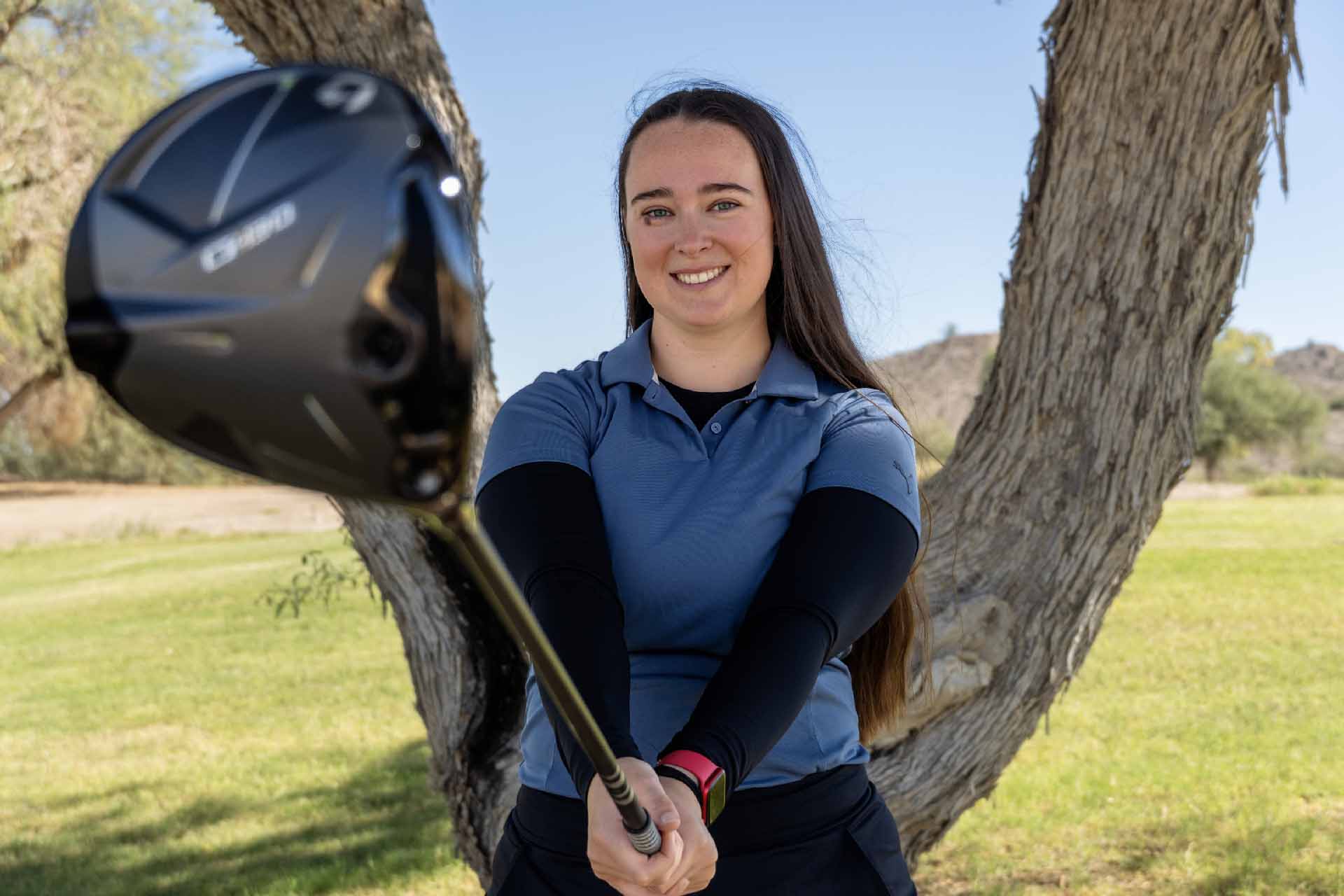
For Avery Arnold, becoming a better golf instructor is not just about learning more about the swing.
It is about learning how to explain the game in a way that actually makes sense to the person standing in front of her.
Avery, an Assistant Golf Professional and PGA Associate at Junior National, recently completed Level 1 of the PGA program and moved into Level 2, where she selected the Teaching & Coaching pathway. Her Level 2 work included a five-day seminar at PGA Frisco, followed by portfolio work that brings those lessons back into real clinics, lessons and coaching experiences.
Photography placeholder
Avery teaching a lesson at Junior National
That path matters because Avery is not simply checking boxes toward a professional credential. She is using the process to become the kind of coach who can meet golfers where they are — juniors, adults, brand-new players, competitive athletes and anyone who wants to feel more comfortable on the course.
One idea from Frisco stuck with her immediately: golf instruction does not need to sound complicated to be useful.
In a room full of golf professionals, Avery said, everyone could explain the swing in technical terms. But that is not always what helps a student. A golfer who is just learning the game may not need a lecture about an “open” or “closed” setup. They may simply need to understand whether they are aimed right or left of the target.
That kind of clarity is central to how Avery thinks about teaching.
“Teaching golf is about more than just your swing. It's about working with you as a person and helping you genuinely enjoy the process.”
For some students, that means starting with the basics: setup, balance and simply making contact with the ball. For others, it means connecting golf to a sport they already understand. Avery might relate posture to a basketball defensive stance, or talk through movement patterns with a junior who has played baseball, softball, volleyball, hockey or soccer.
The point is not to teach every golfer the exact same way.
It is to understand who they are, what they already know, what makes them nervous, what gets them excited and what kind of feedback will actually help them improve.
Photography placeholder
Avery explaining a setup adjustment to a student
Avery learned that lesson from her own coaches, too. She remembers the difference between coaches who knew how to read a player and coaches who did not. Some players need encouragement. Some need direct feedback. Some need a coach who understands when a bad round is not the time for empty positivity. The best coaches, in Avery’s experience, knew their players as people.
That has shaped the way she wants to coach at Junior National Golf Club.
Avery started playing golf when she was seven, introduced to the game by her grandparents. She went on to play collegiate golf at Pacific University in Oregon, where her women’s team won its first tournament in more than a decade.
Now, as an instructor, she gets to help other people find their own connection to the game.
Sometimes that is a junior golfer who needs golf to feel fun before it feels technical. Sometimes it is an adult who wants to play with friends, family or coworkers without feeling lost. Sometimes it is a more experienced player who already knows what they want to improve.
Avery likes all of it.
For her, one of the best parts of teaching is seeing the moment when something starts to click. She remembers kids at golf camps in Oregon who arrived on Monday because their parents needed somewhere for them to go, not because they were especially excited about golf. A few days later, after hitting a few good shots, those same kids would start paying attention, trying harder and enjoying the game.
Photography placeholder
Avery Arnold, portrait
Photography placeholder
Avery demonstrating a swing on the range
That is the kind of progress Avery enjoys most: not just a better swing, but a golfer who starts believing they can do it.
Her PGA education is helping her bring more of that to Junior National. At Frisco, she learned from faculty members with long teaching careers and from other PGA Associates working at different types of golf facilities around the country. She came back with new drills, new ways to explain concepts and new perspective on how to make instruction more useful for different kinds of golfers.
That matters at a place like Junior National, where the mission is not just to operate a golf course, but to make the game more accessible — especially for young golfers.
Avery sees instruction as part of that mission. The more effectively Junior National can teach the game, the more chances young golfers have to use golf as something bigger: a sport, a skill, a source of confidence, a future opportunity or simply a game they can enjoy for life.
And for Avery, the work is still continuing.
After completing Level 1 and attending her Level 2 Teaching & Coaching seminar, she is now working through the applied portfolio portion of the program, which includes clinic work, individual instruction, lesson observation and continued development as a coach.
The PGA Pathway
Completed
Level 1 of the PGA program
Completed, then moved into Level 2.
Completed
Level 2 — Teaching & Coaching pathway
Five-day seminar at PGA Frisco.
In progress
Applied portfolio work
Clinic work, individual instruction, lesson observation and continued development as a coach.
But the direction is clear.
She wants to keep teaching. Keep learning. Keep helping golfers understand the game. And keep building lessons around the person, not just the mechanics.
Photography placeholder
PGA Frisco — Level 2 Teaching & Coaching seminar
Photography placeholder
Avery working with a junior golfer
Photography placeholder
Avery on the course at Junior National
For anyone who has felt intimidated by golf, that approach matters.
You do not need to know the jargon before you take a lesson. You do not need to have a perfect swing. You do not even need to know exactly what you want to work on yet.
You just need a place to start.
Tell us a few details about what you’re working on, and a member of the Junior National golf team will follow up.
Request a Lesson with Avery